Acyclovir may reduce Epstein-Barr virus (EBV) replication, but research suggests it usually does not significantly improve most symptoms of infectious mononucleosis (mono). Because mono is often self-limiting, treatment mainly focuses on rest, hydration, fever control, and symptom relief rather than antiviral therapy. In some severe or specialized cases, doctors may consider antiviral medications, but acyclovir is not routinely recommended for uncomplicated mono.
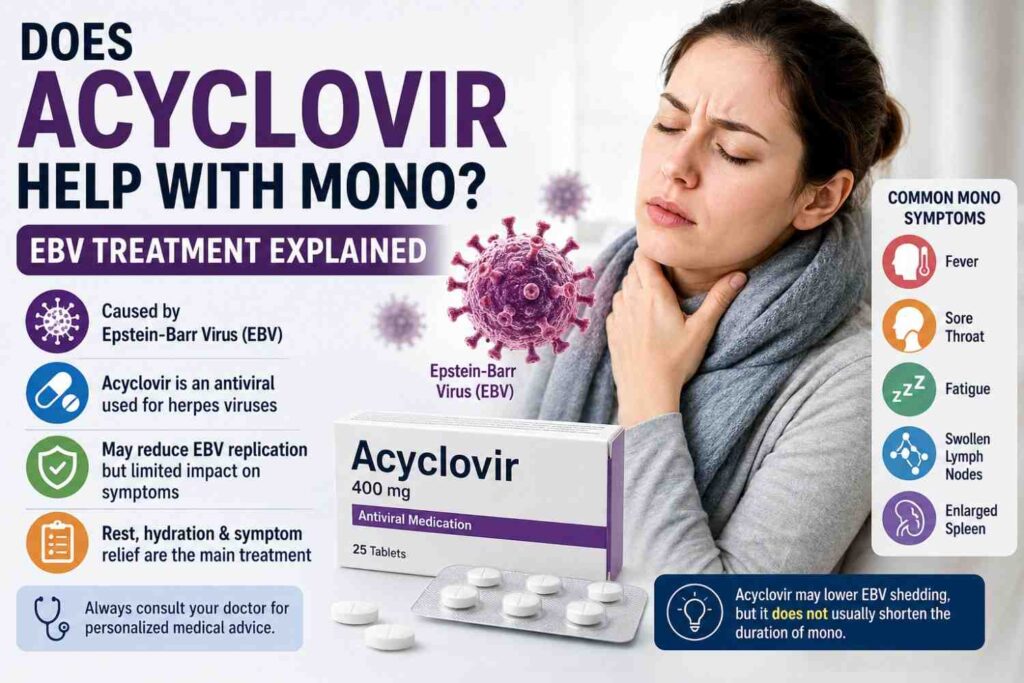
Introduction
Epstein-Barr virus (EBV) is one of the most common human viruses worldwide and the leading cause of infectious mononucleosis, commonly called “mono.” Since EBV belongs to the herpesvirus family, researchers have studied whether antiviral medications such as acyclovir could help treat the infection.
Acyclovir is widely used against herpes simplex virus (HSV) infections, including cold sores and genital herpes. Because EBV shares similarities with other herpes viruses, scientists explored whether acyclovir could reduce viral activity and improve mono symptoms such as fatigue, sore throat, fever, and swollen lymph nodes.
But does acyclovir actually help with mono? The answer is more complicated than a simple yes or no.
What Is Epstein-Barr Virus (EBV)?
Epstein-Barr virus is also known as Human Herpesvirus 4 (HHV-4). It spreads mainly through saliva, which is why mono is often called the “kissing disease.”
Most people are exposed to EBV at some point in life. In many cases, especially during childhood, the infection causes few or no symptoms. However, teenagers and young adults may develop infectious mononucleosis.
Common Symptoms of Mono
- Extreme fatigue
- Sore throat
- Fever
- Swollen lymph nodes
- Enlarged tonsils
- Headache
- Body aches
- Enlarged spleen
After the initial infection, EBV remains dormant in the body for life. In some people, the virus can reactivate later without causing symptoms.
Why Is Acyclovir Considered for EBV?
Acyclovir works by interfering with viral DNA replication. It is especially effective against herpes simplex viruses because those viruses activate the medication efficiently inside infected cells.
Since EBV is part of the herpesvirus family, researchers believed acyclovir might:
- Reduce EBV replication
- Lower viral shedding in saliva
- Potentially shorten illness duration
- Reduce symptom severity
Clinical studies later showed that while acyclovir may reduce EBV shedding, this does not always translate into major symptom improvement for people with mono.
Does Acyclovir Help With Mono Symptoms?
Research on acyclovir for mono has shown mixed results.
Some studies found that acyclovir can decrease EBV replication in the throat and reduce viral shedding. However, many studies also found that the medication does not significantly improve the most troublesome mono symptoms, including:
- Fatigue
- Overall recovery time
- Fever duration
- Swollen lymph nodes
What This Means Practically
A person taking acyclovir may still experience:
- Weeks of fatigue
- Sore throat
- Weakness
- Slow recovery
This is one reason acyclovir is not routinely prescribed for uncomplicated infectious mononucleosis.
What Do Clinical Studies Say About Acyclovir for EBV?
Several clinical studies have evaluated antiviral therapy for infectious mononucleosis.
Findings From Research
Researchers observed that:
- Acyclovir can suppress EBV replication temporarily
- Viral shedding in saliva may decrease during treatment
- Symptoms often continue despite reduced viral activity
- Benefits usually disappear once treatment stops
In many cases, patients did not experience substantial improvements in:
- Energy levels
- Illness duration
- Return to normal activities
Because mono symptoms are partly driven by the body’s immune response—not just viral replication—reducing viral activity alone may not dramatically change recovery.
Why Isn’t Acyclovir Routinely Prescribed for Mono?
Doctors usually do not prescribe acyclovir for standard mono cases because the overall clinical benefit appears limited.
Main Reasons
1. Mono Often Resolves Naturally
Most people recover with supportive care over several weeks.
2. Limited Symptom Improvement
Studies have not consistently shown major improvements in fatigue or recovery time.
3. Potential Medication Side Effects
Although generally well tolerated, acyclovir may cause:
- Nausea
- Headache
- Diarrhea
- Kidney-related complications in rare cases
4. Supportive Care Works for Most Patients
Rest, hydration, and symptom management remain the primary treatment approach.
Can Acyclovir Help Severe or Chronic EBV Cases?
In certain situations, doctors may consider antiviral therapy more seriously.
Severe EBV Complications
Specialists may evaluate antivirals in cases involving:
- Severe throat swelling
- Organ complications
- Immunocompromised patients
- Rare neurological complications
Chronic Active EBV
Chronic active EBV is a rare and serious condition involving ongoing symptoms and abnormal immune responses.
Management may involve:
- Infectious disease specialists
- Hematologists
- Advanced therapies
- Careful antiviral evaluation
However, evidence supporting acyclovir for chronic active EBV remains limited.
Acyclovir vs Valacyclovir for Epstein-Barr Virus
Valacyclovir is a related antiviral medication that converts into acyclovir inside the body.
Key Differences
| Feature | Acyclovir | Valacyclovir |
|---|---|---|
| Absorption | Lower | Higher |
| Dosing Frequency | More frequent | Less frequent |
| Convenience | Moderate | Higher |
Some researchers believe valacyclovir’s improved absorption may offer theoretical advantages, but evidence for significantly better outcomes in mono remains limited.
Neither medication is considered a standard cure for EBV.
Standard Treatment for Infectious Mononucleosis
Most mono treatment focuses on supportive care.
Common Treatment Recommendations
Rest
Fatigue can be intense, especially during the first few weeks.
Hydration
Adequate fluids help prevent dehydration and support recovery.
Pain and Fever Relief
Doctors may recommend:
- Acetaminophen
- Ibuprofen
Sore Throat Relief
Helpful strategies include:
- Warm saltwater gargles
- Cold fluids
- Lozenges
Avoid Contact Sports
An enlarged spleen can rupture with trauma, so strenuous activities should be avoided until medically cleared.
When Should You Seek Medical Attention?
Seek medical care immediately if mono symptoms become severe.
Warning Signs
- Difficulty breathing
- Severe throat swelling
- Intense abdominal pain
- Persistent high fever
- Severe dehydration
- Confusion
- Yellowing of the skin or eyes
These symptoms may indicate complications requiring urgent evaluation.
Key Takeaways
- Epstein-Barr virus is the primary cause of infectious mononucleosis.
- Acyclovir can reduce EBV replication and viral shedding.
- Studies show limited improvement in major mono symptoms.
- Supportive care remains the standard treatment for most people.
- Antiviral therapy may occasionally be considered in severe or specialized cases.
- Most individuals recover fully with time, rest, and proper hydration.
Frequently Asked Questions
Acyclovir may reduce EBV replication, but studies suggest it usually does not significantly improve most mono symptoms such as fatigue and recovery time.
Research has not consistently shown that acyclovir dramatically shortens mono recovery time for most patients.
Mono is usually self-limiting, and antiviral medications often provide limited symptom improvement compared with supportive care alone.
Yes. Studies suggest acyclovir can temporarily reduce EBV shedding in saliva while treatment continues.
Yes. EBV is classified as Human Herpesvirus 4 (HHV-4).
No. There is currently no cure that completely eliminates EBV from the body.
Valacyclovir has better absorption, but evidence showing major clinical advantages for mono remains limited.
Standard treatment includes:
Rest
Hydration
Fever control
Pain management
Avoiding strenuous activities
Evidence remains limited, and treatment decisions should be guided by specialists experienced in managing chronic active EBV.
Many acute symptoms improve within 2 to 4 weeks, although fatigue can sometimes persist for several months.