Acyclovir and L-lysine offer two different approaches to managing herpes infections. Acyclovir is a clinically proven antiviral medication that directly blocks viral replication, while L-lysine is a natural supplement that may help reduce outbreak frequency by limiting arginine, which the virus needs to grow. While acyclovir remains the gold standard for treatment, L-lysine can support prevention, especially in mild or recurring cases.
Understanding Herpes and Why Treatment Matters
Herpes is caused by the herpes simplex virus (HSV), primarily in two forms: HSV-1 (oral herpes) and HSV-2 (genital herpes). Once infected, the virus remains in the body and can reactivate periodically, leading to outbreaks.
Common symptoms include:
- Painful blisters or sores
- Tingling or itching sensations
- Burning during urination (genital herpes)
- Flu-like symptoms in some cases
What triggers outbreaks?
- Stress and fatigue
- Weakened immunity
- Hormonal changes
- Illness or infections
Effective treatment focuses on reducing outbreak severity, shortening healing time, and preventing recurrence, which is where both antiviral medications and supplements play a role.
What Is Acyclovir? (Medical Antiviral Treatment)
Acyclovir is a prescription antiviral medication specifically designed to treat herpes infections.
How it works:
Acyclovir acts as a nucleoside analog, interfering with viral DNA replication. It essentially stops the virus from multiplying, helping control symptoms quickly.
Key benefits:
- Reduces duration and severity of outbreaks
- Speeds up healing of sores
- Helps prevent transmission
- Suitable for both treatment and long-term suppression
Typical uses:
- Cold sores (HSV-1)
- Genital herpes (HSV-2)
- Shingles (varicella-zoster virus)
Acyclovir is widely considered the first-line treatment due to its proven effectiveness and safety.
What Is L-Lysine? (Natural Supplement Approach)
L-lysine is an essential amino acid available as an over-the-counter supplement.
How it works:
Herpes viruses rely on another amino acid called arginine to replicate. L-lysine competes with arginine, potentially reducing the virus’s ability to grow.
Key benefits:
- May reduce frequency of outbreaks
- Supports immune health
- Easily available and affordable
Common usage:
- Daily supplementation (1,000–3,000 mg)
- Preventive support rather than active treatment
While L-lysine is popular as a natural remedy, its effectiveness varies, with some studies showing benefits and others showing limited impact.
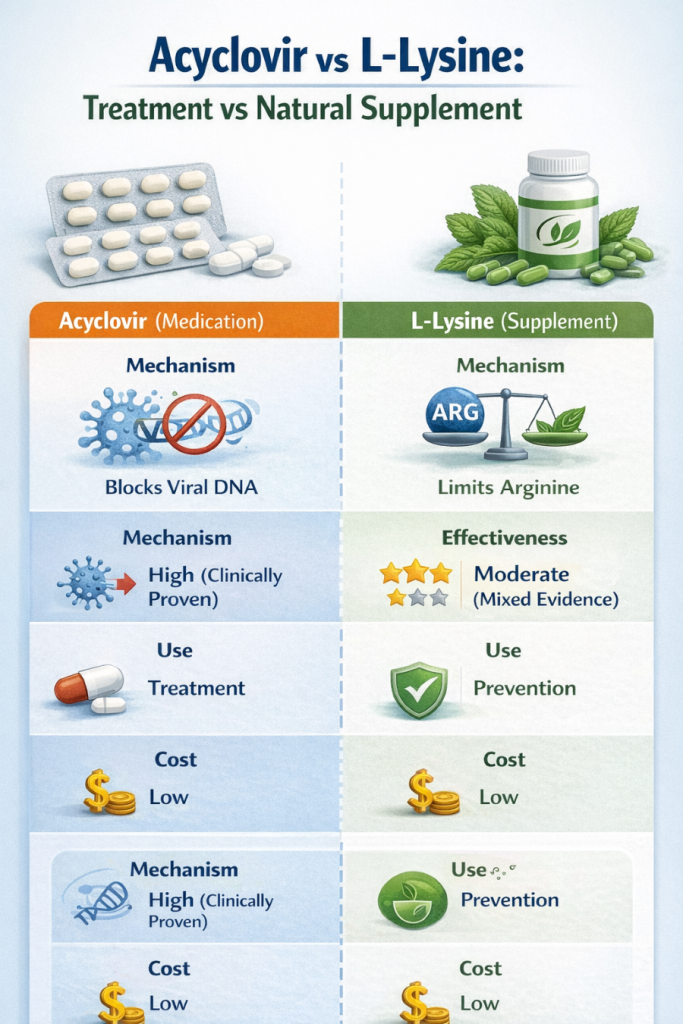
Acyclovir vs L-Lysine: Key Differences Explained
| Feature | Acyclovir (Medication) | L-Lysine (Supplement) |
|---|---|---|
| Type | Prescription antiviral | Natural amino acid |
| Mechanism | Stops viral replication | Limits arginine availability |
| Effectiveness | High (clinically proven) | Mixed evidence |
| Use | Treatment & suppression | Prevention support |
| Cost | Affordable (generic) | Low-cost |
| Availability | Prescription | Over-the-counter |
Key takeaway:
- Acyclovir = Direct treatment
- L-lysine = Preventive support
Acyclovir vs L-Lysine Effectiveness: What Does Science Say?
Acyclovir is backed by strong clinical evidence and is highly effective in managing herpes infections.
L-lysine, on the other hand:
- May help reduce recurrence frequency
- Shows mixed results in clinical studies
- Works better as a long-term preventive strategy
Does lysine actually work for genital herpes?
It may help in some individuals, particularly at higher doses, but it is not a replacement for antiviral medication in moderate to severe cases.
Can You Combine Acyclovir and L-Lysine?
Yes, many people use both together because they work differently.
Why combination works:
- Acyclovir directly blocks viral replication
- L-lysine modifies the internal environment
When to combine:
- Frequent outbreaks
- Preventive long-term management
- Supporting immune health
Always consult a healthcare provider before combining treatments, especially for long-term use.
Side Effects and Safety Comparison
Acyclovir side effects:
- Nausea
- Headache
- Fatigue
- Rare kidney-related issues
L-lysine side effects:
- Generally safe
- High doses may cause stomach discomfort or diarrhea
Key difference:
Acyclovir has known drug interactions, while L-lysine has minimal interaction risks, making it safer for general use.
Choosing the Right Option Based on Your Needs
For Frequent or Severe Outbreaks
Acyclovir is the most effective option due to its direct antiviral action.
For Mild or Occasional Outbreaks
L-lysine may help reduce recurrence and support prevention.
For Daily Preventive Management
A combination of medication, supplements, and lifestyle changes often works best.
Diet and Lifestyle: Supporting Herpes Suppression Naturally
Diet plays a significant role in managing herpes outbreaks.
Foods to avoid (high in arginine):
- Nuts and seeds
- Chocolate
- Gelatin
Foods to include (high in lysine):
- Dairy products
- Fish and meat
- Eggs
Additional strategies:
- Manage stress levels
- Maintain good sleep hygiene
- Support immune health
A balanced diet combined with proper treatment can significantly reduce outbreak frequency.
When to See a Doctor
Consult a doctor if:
- You experience frequent or severe outbreaks
- Symptoms worsen or don’t improve
- You are unsure about treatment options
- You need prescription antiviral medication
Early medical guidance ensures better control and reduces complications.
FAQ Section
No, acyclovir is more effective because it directly targets viral replication. L-lysine may help reduce recurrence but is less reliable as a standalone treatment.
Yes, they are often used together since they work through different mechanisms. However, consult a doctor for proper guidance.
Typical doses range between 1,000 and 3,000 mg daily. Higher doses should only be taken under medical supervision.
No, diet alone is usually not as effective as antiviral medication. However, it can support overall prevention.
Avoid foods high in arginine like nuts, chocolate, and seeds. These may contribute to viral replication.
Acyclovir works faster because it directly blocks the virus. L-lysine is slower and better suited for prevention.
Acyclovir is generally safe but may cause mild side effects. L-lysine is also safe, though high doses can cause digestive issues.
No, L-lysine does not cause resistance. Antiviral resistance to acyclovir is rare but possible.
Yes, this is a common and effective strategy. It combines treatment with prevention.
Acyclovir has some drug interactions, while L-lysine generally does not. Always consult a healthcare provider before combining treatments.