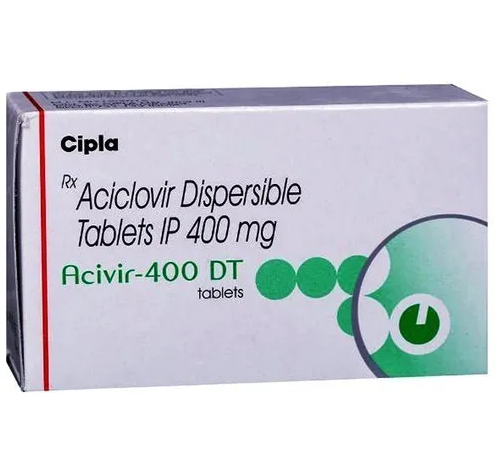
When navigating acyclovir oral tablet instructions, patients frequently ask: can you take acyclovir 400 mg twice a day? The answer is yes. According to standard acyclovir dosage guidelines, taking an acyclovir 400 mg twice a day is the most highly recommended acyclovir dose for long-term suppressive therapy to prevent recurrent genital herpes. While the acyclovir dosage for shingles/herpes/chickenpox acute outbreaks requires much higher doses (often 800 mg up to five times daily), a twice-daily 400 mg dose is the safest and most effective acyclovir frequency and timing strategy for keeping the virus dormant long-term without increasing the risk of acyclovir side effects and dosage complications.

Acyclovir medication is an antiviral that is used to treat or prevent herpes simplex virus infections including genital herpes and cold sores. This drug can also be used for the treatment of other infections such as shingles and chickenpox which are caused by viruses from the same family.
Acyclovir is a prescription drug that is available in various dosages so the suitable dose for one specific patient depends on the condition that needs to be treated and if the infection is initial or a recurrence. Acyclovir oral tablet only comes as a generic drug.
Key Facts About Acyclovir Tablets
Acyclovir belongs to the class of drugs called antivirals. It comes in various drug forms including an oral capsule, oral suspension, topical cream, topical Acyclovir ointment, and a buccal tablet. Additionally, Acyclovir also comes as an intravenous drug (Acyclovir sodium injection) that can be only administered by a healthcare professional. Acyclovir antiviral medication can be used in combination with other medications when a patient requires combination therapy to treat viral infections.
Aciclovir tablets are used for oral administration. Acyclovir 800 mg tablet comprises 800 mg of Acyclovir and the inactive ingredients croscarmellose sodium, colloidal silicon dioxide, magnesium stearate, and microcrystalline cellulose. Acyclovir 400 mg tablet comprises 400 mg of Acyclovir and the inactive ingredients croscarmellose sodium, colloidal silicon dioxide, magnesium stearate, and microcrystalline cellulose.
Common Uses of Acyclovir
Acyclovir is most commonly used to treat various viral infections. These infections include genital herpes, cold sores, herpes zoster (shingles), and varicella (chickenpox). Acyclovir does not cure herpes infections as it does not kill the viruses. Herpes virus stays in your body for a lifetime. Acyclovir treats symptoms and makes the virus inactive. The virus may get active in future years causing symptoms again.
How Acyclovir Works (Mechanism of Action)
Acyclovir medicine works by lowering the capability of the herpes virus to reproduce inside the body. It effectively treats the symptoms of infection and helps manage the symptoms. Even after taking this medicine, the herpes virus still lives inside the body. Patients may experience symptoms and recurrence of infection at a later age.
Acyclovir Dosage by Condition
Immediately consult your doctor in case you have upsetting or severe adverse reactions while using any prescription drugs including Acyclovir. Inform your doctor if you are pregnant, trying to get pregnant, breastfeeding your baby or you have any other health issues. Make sure you maintain adequate hydration while you are taking Acyclovir treatment.
Herpes Zoster (Shingles) Dosage
Acyclovir tablets are indicated for the acute treatment of herpes zoster infection. There is no information concerning the Acyclovir treatment started over 72 hours after the onset of zoster rash. Patients are advised to begin with the treatment soon after the diagnosis of herpes zoster infection.
Genital Herpes (HSV) Dosage
Patients should be aware that Acyclovir is not a cure for genital herpes infections. There is no information assessing whether Acyclovir can avert transmission of infection to other healthy people. Genital herpes can be transmitted sexually and through direct skin-to-skin contact so patients should avoid contact with lesions or sexual intercourse when lesions or symptoms are present in order to avoid spreading herpes.
Patients can spread genital herpes to others if symptoms are not visible through asymptomatic viral shedding. If your healthcare professional suggests medical management of the recurrence of genital herpes, it is advised to begin with genital herpes treatment at the first sign or symptom of a recurrence episode.
Chickenpox (Varicella-Zoster Virus) Dosage
Usually, chickenpox is a condition of mild to moderate severity. Adolescents and adult patients tend to have more extreme diseases. Studies suggest that Acyclovir traetment works best when started with 24 hours of a chickenpox rash and there is less information regarding the effectiveness of traetment started after 72 hours of onset of symptoms.
How to Take Acyclovir Tablets Safely
Acyclovir oral tablets come in 400 mg and 800 mg strengths. In the case of the Acyclovir oral tablet, the dosage depends on the patient’s age, the condition being treated, the severity of the condition, other medical conditions, and the response to the first dose of the treatment.
Acyclovir Dosage for Seniors (65+)
The kidneys of older age adults may not work as well as they used to do in adult age. it can make your body process drugs more slowly. As a result of this, more of a medication remains in your body for a longer period. It may increase your chances of developing side effects.
In senior patients, your healthcare professional may prescribe a lowered dose or a different medication plan. It allows maintaining levels of this medicine from building up too much inside the body.
Acyclovir Dosage for Adults (18–64)
Shingles: Shingles typical dosage of Acyclovir is 800 mg every 4 hours, five times a day for 7 to 10 days.
Genital Herpes: Usually prescribed initial adult dosage for genital herpes treatment is 200 mg every 4 hours, five times a day for 10 days.
Recurrent Herpes Prevention: The typical dosage for the prevention of recurrent herpes infections is 400 mg twice a day, every day for up to 12 months. A different medication schedule may include 200 mg 3 to 5 times a day. Your healthcare provider decides how long you need to take Acyclovir to avoid a flare-up of the infection.
Reinfection: The typical dosage for a flare-up of the infection is 200 mg every 4 hours, five times a day. It is recommended to take this medicine as soon as the initial signs of a flare-up appear.
Chickenpox: Typical chickenpox adult dosage is 800 mg 4 times a day for 5 days. Start taking this medicine as soon as the first sign of chickenpox appears. This drug may not be effective if you begin it after 24 hours of the appearance of initial symptoms.
Acyclovir Dosage for Children (2–17 Years)
Chickenpox: Chickenpox typical dosage for children with a body weight of 40 kg or less is 20 mg/kg of body weight, four times a day for 5 days, and for children with a body weight of 40 kg or more is 800 mg four times a day for 5 days. Child dosage should be started as you notice the first symptom of chickenpox.
Acyclovir Dosage for Infants (Under 2 Years)
The safety and efficacy of Acyclovir are not confirmed for children below 2 years of age. Do not give this medicine to children less than 2 years of age.
Why Correct Acyclovir Dosage Matters
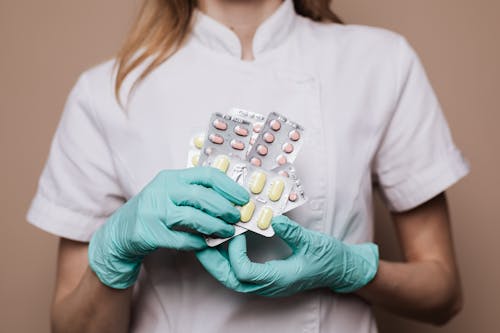
For any reason, taking the wrong dose of Acyclovir is not recommended. It is recommended to take Acyclovir exactly as prescribed by your healthcare provider and follow the directions on the patient information leaflet.
Taking too high doses of Acyclovir may increase the chances of side effects or an adverse reaction to this drug. Also, it will not help you manage your symptoms and get rid of infections faster. Taking higher doses of Acyclovir accidentally usually does not harm however taking too many doses for several days may lead to severe symptoms.
On the other hand, taking too low Acyclovir doses indicates that you are not using sufficient dosage to treat your infections effectively. If you are taking this medicine to prevent flare-ups of your infection, you should maintain a certain level of medication in your body all the time otherwise it may not work well or even stop working entirely.
Comparison of Acyclovir Tablet Strengths
Different dosages of Acyclovir are prescribed to treat a range of infections. Acyclovir tablets and capsules are available as 200 mg, 400 mg, and 800 mg. Acyclovir 400 mg tablets are commonly prescribed to treat an outbreak and as ongoing treatment for recurring genital herpes infections.
Acyclovir 200 mg Dosage
It is the weakest dose of Acyclovir available in the form of a tablet or capsule. If you are exposed to the herpes virus for the first time, Acyclovir 200 mg can be prescribed as an initial dosage. Acyclovir 200 mg may also be prescribed to treat flare-ups. This dosage is usually used for the treatment of cold sores.
Acyclovir 400 mg Dosage
It is the typical dosage used for preventing recurrent herpes. Start taking Acyclovir as soon as the initial symptoms such as blisters and a burning sensation appear. For prevention of recurrence, you may need to take this dosage every day for up to 6 months. Your healthcare professional will decide how long you need to take Acyclovir 400 mg to avoid flare-ups.
Acyclovir 800 mg Dosage
It can be prescribed for the treatment of many viral infections such as shingles and chicken pox. Usually, this dosage is prescribed 3 to 5 times a day for 5 days. It is best to begin with this drug as soon as the first signs of chickenpox appear.
Can You Take Acyclovir 400 mg Twice Daily?
Make sure you use this medicine exactly as prescribed by your healthcare provider. Do not alter the dosage or frequency until your doctor asks you to do so. Children (12 years and above) and adults can take Acyclovir 400 mg 2 to 5 times a day for 5 days or up to 11 months depending on the frequency of outbreaks of herpes infections.
The typical dosage of Acyclovir to prevent recurrent herpes is 400 mg 2 times a day for up to 12 months. Your doctor may suggest a different dosing plan depending on various factors and other assessments.
Side Effects of Acyclovir Tablets
Acyclovir oral tablet and capsule is not associated with causing drowsiness but it may cause some other side effects which are usually mild and do not require any treatment.
Common Side Effects
Common side effects of Acyclovir oral tablet include nausea, vomiting, diarrhea, weakness, and headache. In most cases, these side effects go away after you stop taking the medication.
Serious Side Effects
If you experience any serious or life-threatening side effects of this drug, call your doctor immediately. Symptoms of severe side effects include uncommon changes in mood or behavior (confusion, aggression, shaky movements, coma, hallucinations, seizures), reduction in red blood cells and platelets (fatigue), liver problems, muscle pain, allergic skin reaction (hair loss, rash, hives, breaking of skin), vision changes, kidney failure (blood in urine, kidney or flank pain), allergic reaction (hives, rash, trouble breathing, swelling of tongue or throat).
Warnings and Precautions
Patients With Kidney Disease
If you have any type of kidney problems or a history of kidney issues, you may not be able to clear this medicine from your body as well as people with normal kidney function. It may increase the levels of this medicine inside your body and develop side effects.
This drug may decrease your kidney function making your kidney problems worse. Your healthcare professional can adjust your dosage considering how well your kidneys are functioning to avoid side effects.
Pregnancy Considerations
Acyclovir is a category B pregnancy drug. This means studies of this drug in pregnant animals have not demonstrated a risk to the fetus and there are no adequate studies performed in pregnant women to evaluate if the drug can cause risk to the fetus.
Make sure your doctor knows if you are pregnant or planning a pregnancy. This medicine should be only prescribed to pregnant women if the potential benefits validate the potential risk.
Breastfeeding Considerations
Acyclovir medicine may pass into breast milk and it may cause side effects in a nursing baby. Tell your doctor if you are breastfeeding your baby. You may have to stop breastfeeding while taking this drug.
Clinical Studies on Acyclovir Dosage & Effectiveness
Initial Genital Herpes Outbreak (Dosage Used)
The studies stated that oral administration of Acyclovir significantly reduced the duration of lesion healing and acute infection. In some patient groups, the duration of pain and formation of new lesions was also decreased.
Recurrent Genital Herpes (Suppressive Dosage)
Studies conducted in patients with very frequent recurrences have revealed that administration of oral Acyclovir every day for 4 months to 10 years prevented or decreased the frequency and severity of recurrence episodes in more than 95% of patients.
In a trial, patients were administered Acyclovir 400 mg two times a day for 3 years. As a result 45%, 52%, and 63% of patients have no recurrences in the first, second, and third years respectively. Serial assessments of 3-month recurrence rates for the patients suggested that 71% to 87% of patients have not experienced recurrent outbreaks in each quarter.
Herpes Zoster (Shingles) Study Findings
A study was performed involving patients (immunocompetent) with localized cutaneous zoster infection. Acyclovir 800 mg was given 5 times daily for 10 days. It notably decreased the times to lesion scabbing, healing, and pain. It also shortened the duration of viral shedding and the formation of new lesions.
In another study, Acyclovir 800 mg (5 times a day for 7 days) reduced the time to complete lesion scabbing, healing, and pain. It also decreased the duration of new lesion formation and the influence of localized zoster-associated neurologic symptoms such as dysesthesia.
Chickenpox (Varicella) Study Findings
The randomized trials were performed on 993 children of 2 to 18 years of age with chickenpox. All of these patients were treated within 24 hours after the onset of the rash. In two trials, Acyclovir was given at 20 mg/kg 4 times a day for 5 days and in the third one 10, 15 or 20 mg/kg was administered 4 times every day for 5 to 7 days.
FAQs
Yes, can you take acyclovir twice a day safely? Absolutely. The acyclovir 400mg dosage taken twice daily is the standard clinical protocol for suppressive therapy to prevent recurrent genital herpes flare-ups over a long period (up to 12 months).
The acyclovir dosage for herpes outbreaks, shingles, or chickenpox is much more frequent than suppressive therapy. For acute infections, the acyclovir frequency and timing usually require taking the medication 3 to 5 times a day (every 4 to 8 hours) for 5 to 10 days, depending on the specific condition.
When wondering how to take acyclovir 400 mg, it is best to take it with a full glass of water. You can take it with or without food, but taking it with meals can help prevent nausea. Maintaining high hydration is a critical part of the acyclovir oral tablet instructions to protect your kidneys.
Yes, is it safe to take acyclovir twice a day for months or years? Clinical studies regarding acyclovir pharmacokinetics show that taking 400 mg twice daily for up to 10 years successfully prevents recurrences in over 95% of patients safely, provided their kidney function is regularly monitored.
If you miss a dose, take it as soon as you remember. However, if it is almost time for your next scheduled pill, skip the missed one. Never double your acyclovir oral tablet dosage to catch up, as this increases the risk of side effects.
The recommended acyclovir dose varies wildly by age and weight. Adults take standard 400 mg or 800 mg tablets based on the infection type. For children (2–17 years) treating chickenpox, the dosage is strictly weight-based, typically 20 mg/kg of body weight taken four times a day.